
Personalization at Scale : The Next Frontier in Senior Living
June 30, 2026
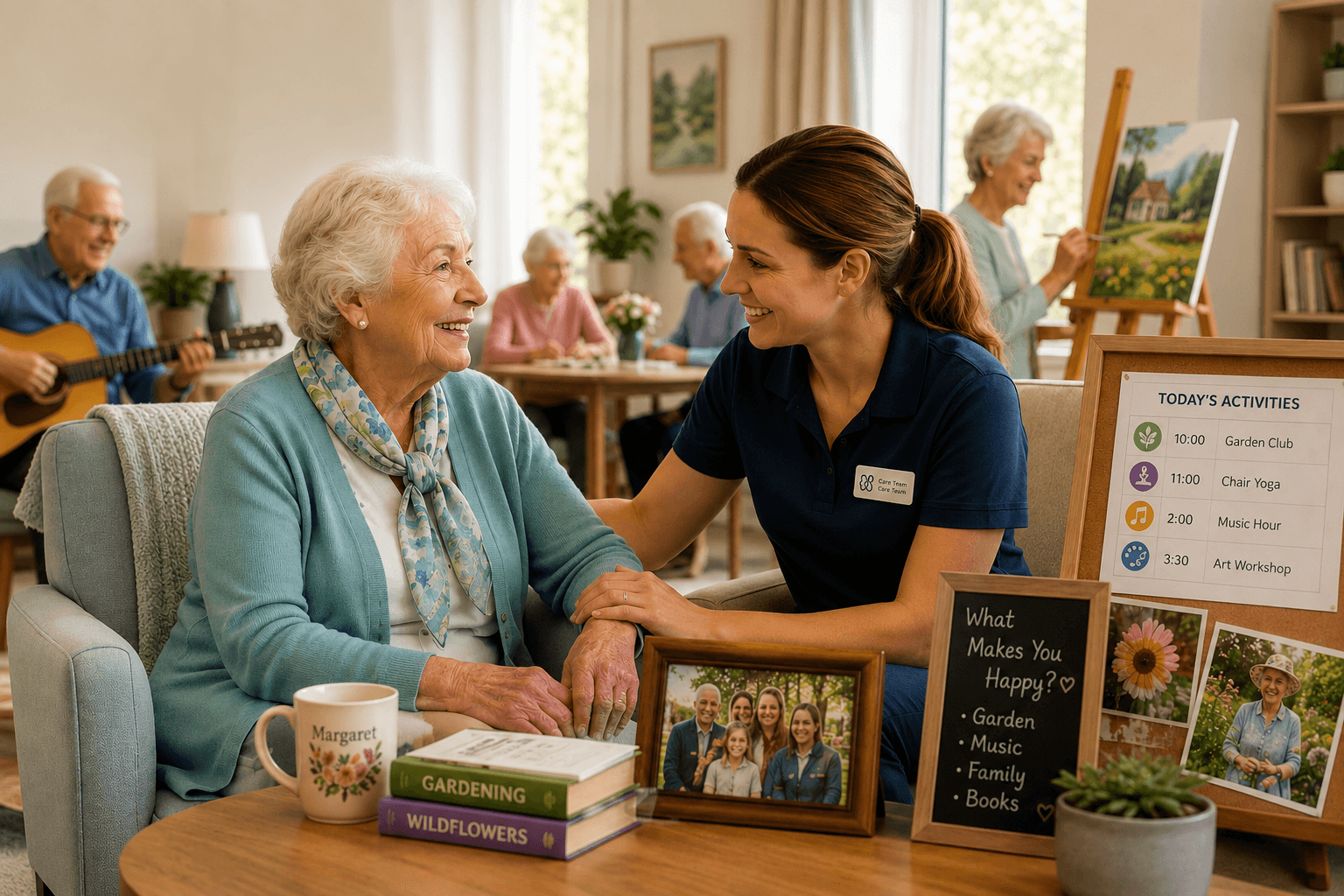
AI generated image
Every senior living community promises personalized care. The phrase appears in marketing materials, sales conversations, and mission statements across the industry because it reflects something fundamentally important: residents want to be recognized as individuals, not simply as recipients of services.
At its best, personalization transforms the resident experience. It acknowledges the routines, preferences, relationships, interests, and life stories that shape a person’s identity. It creates a sense of belonging and familiarity. Residents feel understood, families gain confidence in the care environment, and staff are better equipped to foster meaningful engagement.
Yet personalization is becoming increasingly difficult to sustain. Residents are entering communities later in life with more complex needs and higher expectations. At the same time, operators continue to navigate workforce turnover, administrative burdens, and fragmented technology environments that make it harder to maintain continuity. While most communities recognize the importance of personalization, far fewer have developed a strategy for delivering it consistently across shifts, departments, and staff transitions.
The challenge is not a lack of commitment. The challenge is scale.
Residents Thrive When They Feel Known
The resident experience is shaped by far more than clinical care or daily services. It is influenced by whether residents feel connected to the people and community around them. A resident who is encouraged to participate in activities aligned with lifelong interests is more likely to engage socially. A resident whose routines are respected often experiences greater comfort and stability. Families notice when staff understand the details that make their loved one unique, and those moments reinforce trust in the organization.
These insights may seem small individually, but collectively they form the foundation of personalized living. They help transform senior living from a place where services are delivered into a community where residents can continue to grow, contribute, and maintain a sense of purpose.
The challenge is that this type of personalization depends on knowledge. Staff must understand not only a resident’s care needs, but also the personal context that influences how they experience daily life. That knowledge is one of the most valuable assets a community possesses, yet it is often one of the least protected.
Why Personalization Breaks Down
In many communities, critical resident knowledge lives in the minds of experienced employees. Caregivers understand routines and preferences. Activity directors know which programs resonate with specific residents. Dining teams learn individual habits and preferences. Front-line staff often become the custodians of information that never formally appears in assessments or care plans.
While this knowledge creates exceptional resident experiences, it also creates vulnerability. When employees leave, retire, or change roles, valuable context can disappear with them. New staff members may have access to documentation, but documentation alone rarely captures the relationships, observations, and personal details that enable truly personalized interactions.
Fragmented technology environments can make the problem even worse. Information becomes scattered across departments and systems, making it difficult for staff to develop a complete understanding of the resident. As a result, personalization becomes inconsistent. Residents may feel deeply known by one employee and largely unknown by another. Families may experience varying levels of communication depending on who happens to be available.
Over time, these small inconsistencies accumulate and begin to erode the very experience communities are working to create.
From Personalization to Personalization at Scale
Historically, senior living has relied on dedicated staff members to preserve and share resident knowledge. While that approach can work in smaller environments, it becomes increasingly difficult as organizations grow and workforce dynamics become more challenging.
The next frontier is not simply delivering personalization. It is delivering personalization consistently and at scale.
Achieving that goal requires communities to treat resident knowledge as an organizational asset rather than an individual asset. Information about preferences, engagement history, family interactions, wellness observations, and daily routines should be accessible across teams and departments. When resident knowledge becomes connected and actionable, personalization no longer depends entirely on memory, tenure, or informal handoffs.
Technology plays an important role in this evolution, but the objective is not automation for its own sake. The objective is to support more human interactions. Connected information enables staff to spend less time searching for context and more time building relationships. It helps new employees become effective more quickly and allows communities to preserve continuity even when staffing changes occur.
The Communities That Will Lead The Future
The future of senior living will belong to communities that can make every resident feel known, regardless of who is working, what shift is underway, or how much organizational change has occurred behind the scenes.
That capability represents more than a resident experience initiative. It is a strategic advantage. Communities that successfully preserve and scale personalization are better positioned to strengthen engagement, improve family satisfaction, support staff effectiveness, and differentiate themselves in an increasingly competitive market.
For years, personalization has been viewed as a hallmark of exceptional senior living. The next challenge is ensuring that personalization remains consistent as communities grow, resident needs become more complex, and workforce pressures continue.
The organizations that solve this challenge will discover that personalization is not simply something they provide. It becomes part of how the community operates.
And when residents consistently feel known, the benefits extend far beyond satisfaction. They become the foundation for stronger relationships, deeper engagement, and more resilient communities.
CareSynchrony.ai is a Florida based technology company with a singular focus in helping senior living operators efficiently deliver personalized care for residents. The CareSynchrony® platform is a comprehensive, modular and fully integrated tech stack designed exclusively for senior living. Learn more.